How Tokenization Opens Private Markets to SMEs
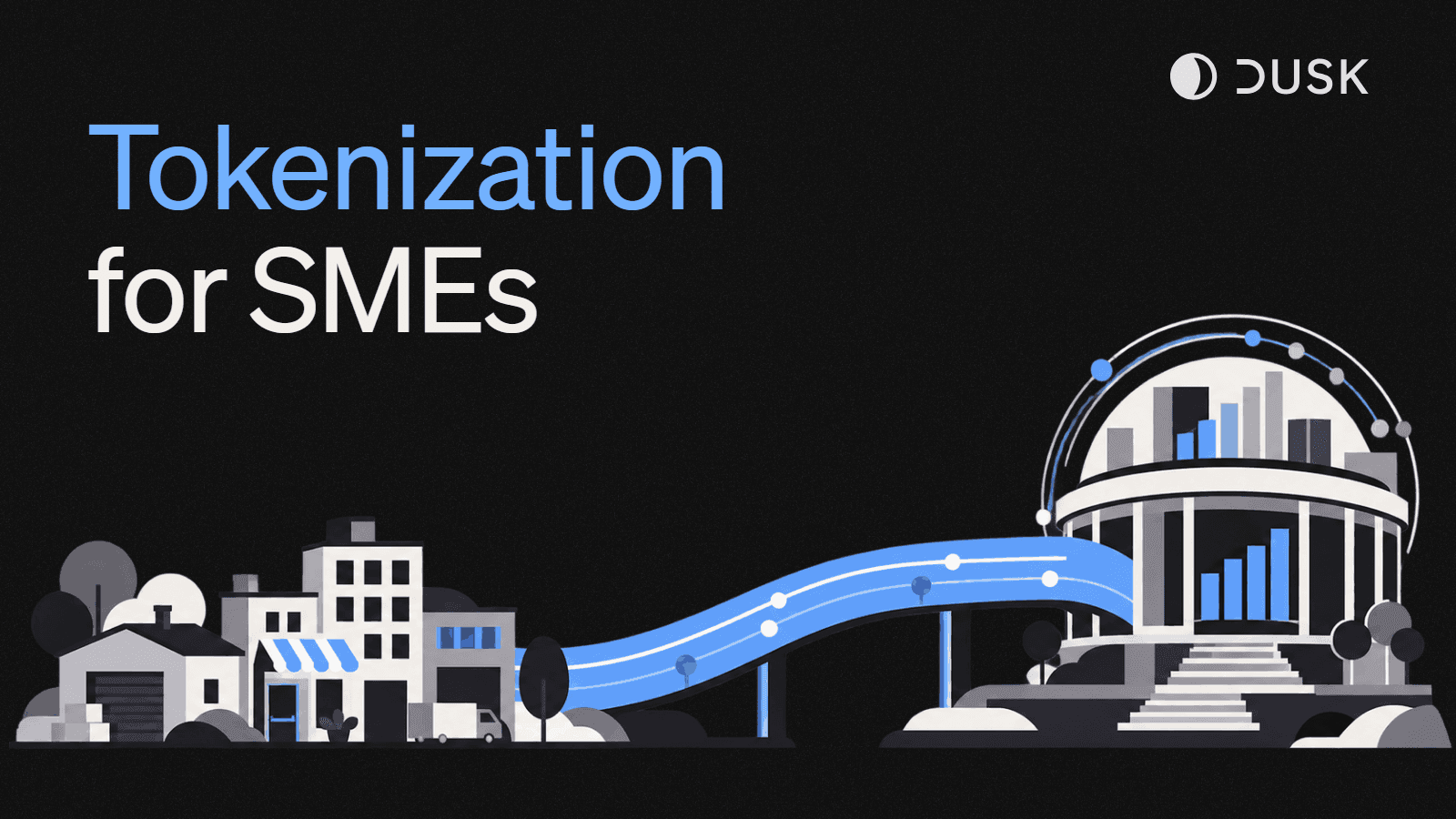
Tokenization for SMEs creates most value when it simplifies the complete ownership lifecycle. A well-designed digital security can connect issuance, investor eligibility, ownership records, transfers, dividends, voting and settlement around a shared record.
That can reduce repeated data entry and reconciliation between issuers, advisers, administrators, banks, custodians and venues. It also creates a practical route to regulated investor access and secondary-market infrastructure.
Fractional ownership plays a limited role. Smaller units cannot create investor demand, legal certainty or liquidity. The value of tokenization and issuance lies in connecting an investable security to accountable operators, eligible buyers, reliable payment and settlement, and an authorized venue.
Why private-market financing remains fragmented
SME financing relies heavily on bank lending and internal funds. The European Central Bank’s Survey on the Access to Finance of Enterprises tracks access to loans, credit lines, equity and other external finance.
Private securities provide another route for SMEs, but the supporting process involves many handoffs. The issuer must structure the instrument, document its rights, onboard investors, collect subscriptions, allocate the security, update ownership records and service it over time. Different participants may keep separate versions of the same information.
For a Dutch private limited company, incorporation involves a civil-law notary and the company must maintain a shareholder register. Transfers of BV shares also use a notarial deed, as the Dutch government’s guidance on private limited companies and business transfers explain.
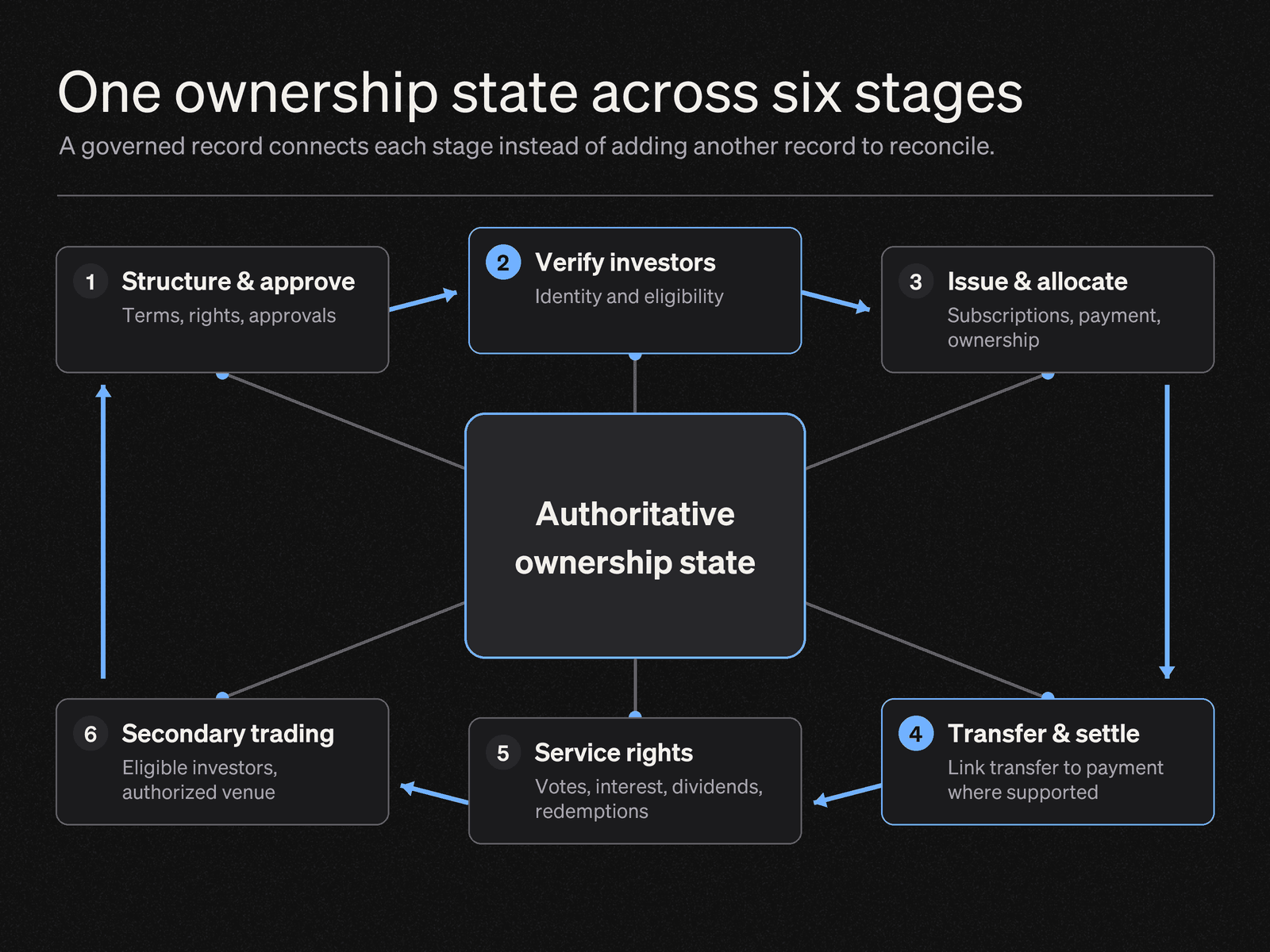
A digital shareholder register can improve administration, but the parties still need to establish which record is legally authoritative and how mandatory notarial actions are reflected. Private market tokenization must connect to those obligations instead of creating another record that requires reconciliation.
How tokenization changes the ownership lifecycle
Tokenized securities issuance represents an investment instrument and its associated rights on distributed-ledger infrastructure. Depending on the design, the token may mirror an entitlement administered elsewhere or form part of a native digital issuance workflow. Its reliability depends on the legal claim, operating model and authoritative ownership record behind it.
Investor eligibility can be checked before a subscription or transfer is accepted, while issuance, allocation and ownership updates use the same controlled record. Transfer and settlement rules can then operate on that state instead of relying on repeated reconciliation between separate systems.
This reduces duplicate entry, manual checking and reconciliation when the issuer, administrator and venue use the same controlled process. Putting a token beside unchanged manual systems would add another record rather than improve the market.
A before-and-after private-market workflow
Stage | Conventional workflow | Tokenized workflow | What remains |
|---|---|---|---|
Structuring and approval | Issuer, advisers and corporate bodies define and approve the instrument across separate documents and systems. | Instrument terms and permitted actions are mapped into the digital-security design. | Corporate approvals, disclosure, legal classification and offering rules. |
Investor onboarding | Identity and eligibility evidence moves between the issuer, administrator, adviser and venue. | Verified eligibility can be referenced by issuance and transfer processes, with selective disclosure where supported. | Due diligence, sanctions screening, investor classification, data governance and accountable operators. |
Subscription and issuance | Orders, payments, allocations and ownership records are reconciled after the raise. | Subscription, allocation and digital ownership can be coordinated through a shared process. | Valid subscription terms, payment, final approval and an authoritative legal record. |
Transfer and settlement | The buyer, seller, bank, administrator, registrar, notary or venue exchange instructions and update records in sequence. | Transfer controls and settlement instructions can be applied to the same transaction, with delivery linked to payment where supported. | Eligible counterparties, payment, custody and any required notarial or venue process. |
Servicing and corporate actions | Administrators assemble holder data for notices, votes, interest, dividends and redemptions. | A current ownership state can support entitlement calculations and controlled execution. | Issuer decisions, tax treatment, communications, dispute handling and oversight. |
Secondary trading | Transfers are bilateral or occur on a venue, often with limited distribution and periodic reconciliation. | A regulated venue can admit eligible investors and coordinate trading and post-trade processing. | Authorization, admission rules, surveillance, price formation, demand and market depth. |
Compliance and liquidity still need institutions
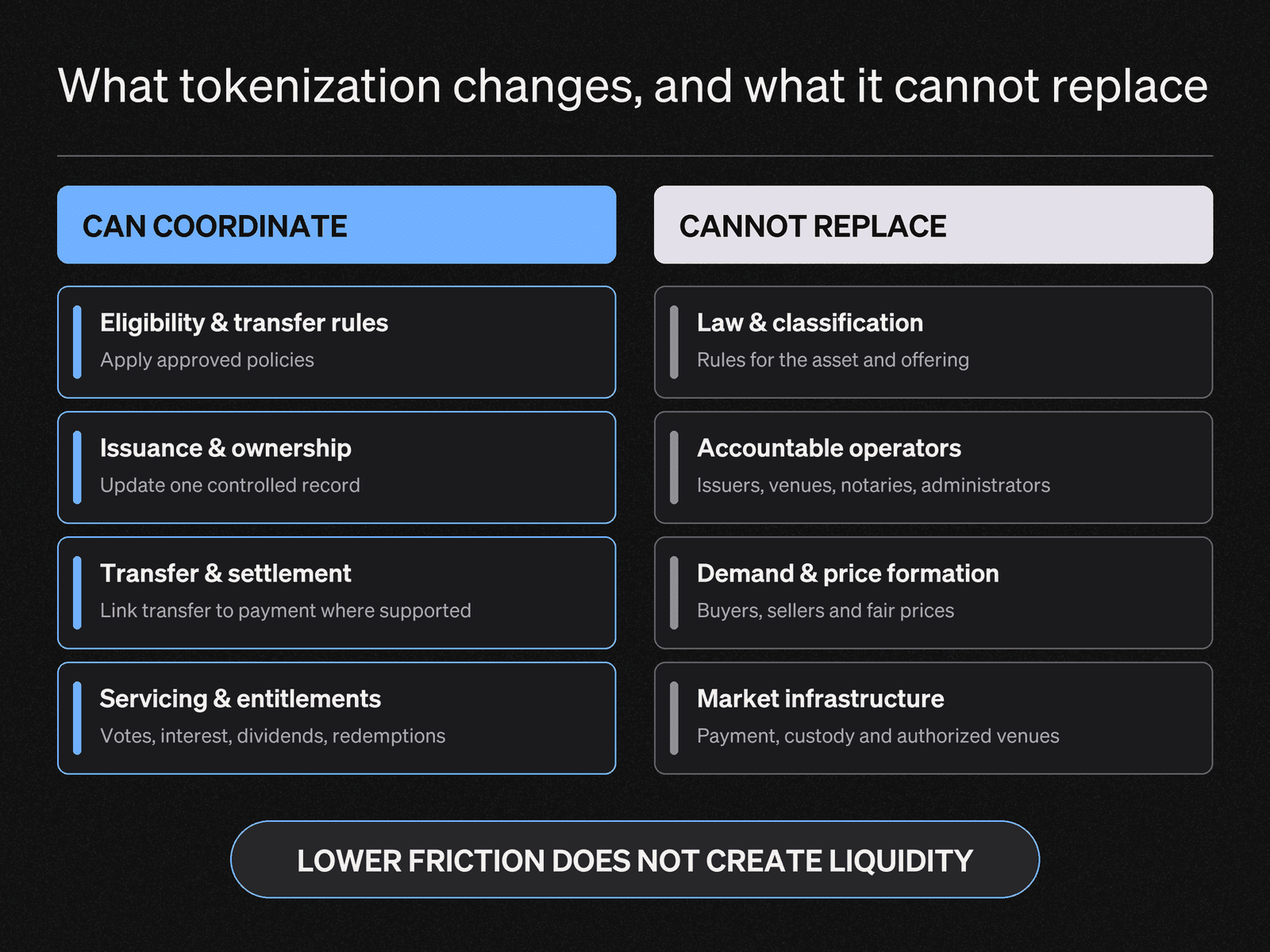
Tokenization can apply approved eligibility and transfer policies when a transaction is submitted. It cannot decide which laws apply or replace the issuer, venue, notary, administrator and advisers responsible for interpreting and maintaining those rules.
Those responsibilities continue after issuance. Investor communications, voting, dividends, interest and redemptions still require correct records, approved calculations, available funds and accountable decision-makers. The operating model must also handle lost credentials, ownership disputes, court orders and incorrect payments.
The same ownership and servicing records create a privacy requirement. Dusk combines private transaction data with selective disclosure for regulatory and servicing needs. Permitted parties can verify relevant information without exposing the complete investor record publicly.
Secondary market liquidity has its own institutional dependencies. Tokenization can reduce transfer and settlement friction, but it cannot produce buyers, sellers or fair prices. The market still needs demand, useful information, workable pricing, a payment leg and a venue permitted to operate the service. The OECD’s analysis of asset tokenization identifies the same dependencies.
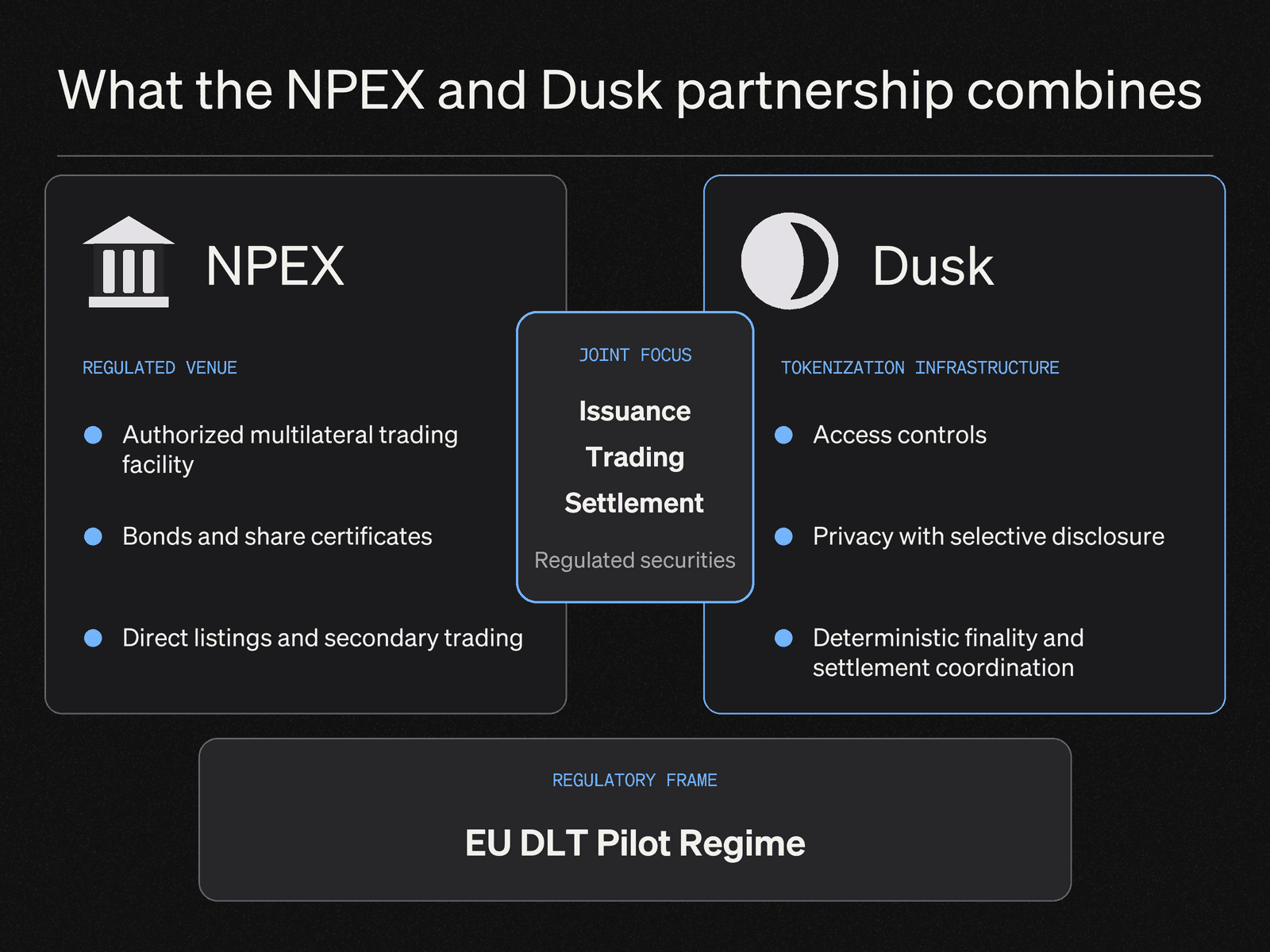
For EU market operators, the DLT Pilot Regime provides a supervised framework for testing DLT-based trading and settlement under selected exemptions.
NPEX and the SME market
The Dutch Authority for the Financial Markets lists NPEX as an authorized multilateral trading facility.
NPEX supports companies raising capital through bonds and share certificates, direct listings and secondary trading. For an SME issuer, the value is a connected path from financing to eligible investor access and a regulated secondary venue.
NPEX partnered with Dusk to develop DLT-powered market infrastructure for regulated securities. The collaboration combines NPEX’s experience operating a Dutch SME exchange with Dusk’s technology for issuance, trading and settlement in a model designed for the EU DLT Pilot Regime.
From market infrastructure to investor access
Dusk provides infrastructure for regulated tokenization and native issuance across the asset lifecycle. Confidential transactions and selective disclosure protect sensitive investor data. Programmable assets and transfer rules support controlled issuance, trading and servicing, while deterministic settlement coordinates ownership transfer with payment where both legs are represented onchain.
Dusk Trade is an investment platform for tokenized real-world assets (RWAs), giving investors one place to discover, buy and sell tokenized stocks, bonds, funds, exchange-traded funds (ETFs), money market funds (MMFs), certificates and other regulated assets.
Join the Dusk Trade waitlist so you don’t miss early access to tokenized real-world assets.
This article is for informational purposes only and does not constitute financial, legal, or investment advice.